Preparation
Recommended methods are:
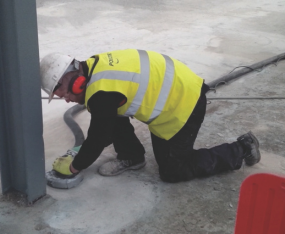
Powerfloated, loose or friable concrete – use a Vacuum Assisted Shotblaster to remove weak laitance and provide a surface key for the coating. If this is not possible, chemically etch with Polycote Etch IT then rinse thoroughly and allow to dry.
Loose paint or rust – remove, using a Vacuum Assisted Shotblaster, Floor Grinder or equivalent method.
Oil or grease – use Hot Compressed Air for large areas of contamination.
Smaller, isolated deposits may be chemically cleaned with Polycote Degrease IT then rinsed thoroughly and allowed to dry. See relevant Data Sheet prior to application.
Once prepared, the area must be kept clean and free of traffic.
Mixing
Having fully prepared the substrate, stir the individual components before mixing together.
Add the hardener to the resin and thoroughly mix for at least 4 minutes until a uniform, lump-free consistency and even colour is achieved. Make sure that any material sticking to the sides and bottom of the mixing vessel is thoroughly mixed in.
Do not hand mix or divide packs. For best results use a slow speed drill with a mixing paddle.
Ensure thorough mixing as an unmixed product will result in a poor or non-cure situation.
Application
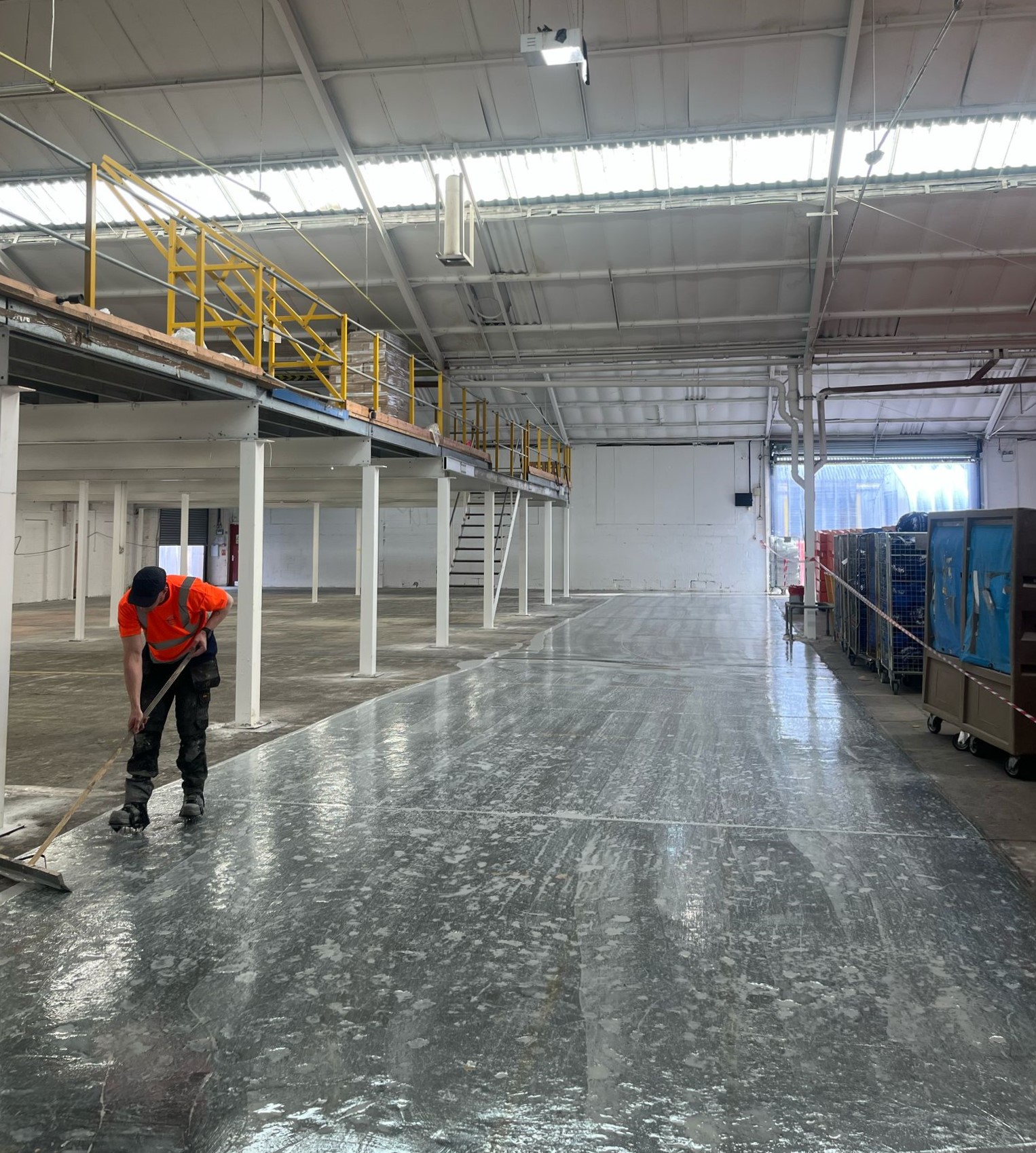
After mixing, apply immediately by brush, short to medium pile lambs wool roller or squeegee, making sure that the surface is completely covered.
Particular attention should be given to doorways and other areas of high traffic.
When finished, do not scrape the remaining contents from the container as this will invariably include unmixed raw resin.
On porous surfaces EP Primer will be absorbed very quickly leaving dry patches. Apply a second coat to these dry patches to ensure good adhesion and reduce the possibility of air release from the substrate causing bubbles or pinholing in the top coat application.
For a Slip Resistant finish
For slip resistance, sprinkle Polycote Calcined Bauxite aggregate onto the wet primer coat.
The normal sprinkling rate is 4-8m2 per 1kg aggregate, but this rate may be varied between 0.5m2 – 10m2 per 1kg, depending on slip resistance required.
This method allows selective areas of non-slip treatment to be applied as required.
Spiked shoes should be worn to avoid disturbing the wet coating.
Allow to cure before overcoating to encapsulate the aggregate.
Application Temperature
Normal application temperature is between 10°C and 25°C. The temperature must remain at least 3°C above the dew point until the top coat is applied, otherwise ‘blooming’ may be caused by condensation. Ensure that the ambient temperature remains above 10°C for at 24 hours after installation.