Preparation
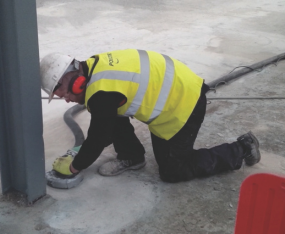
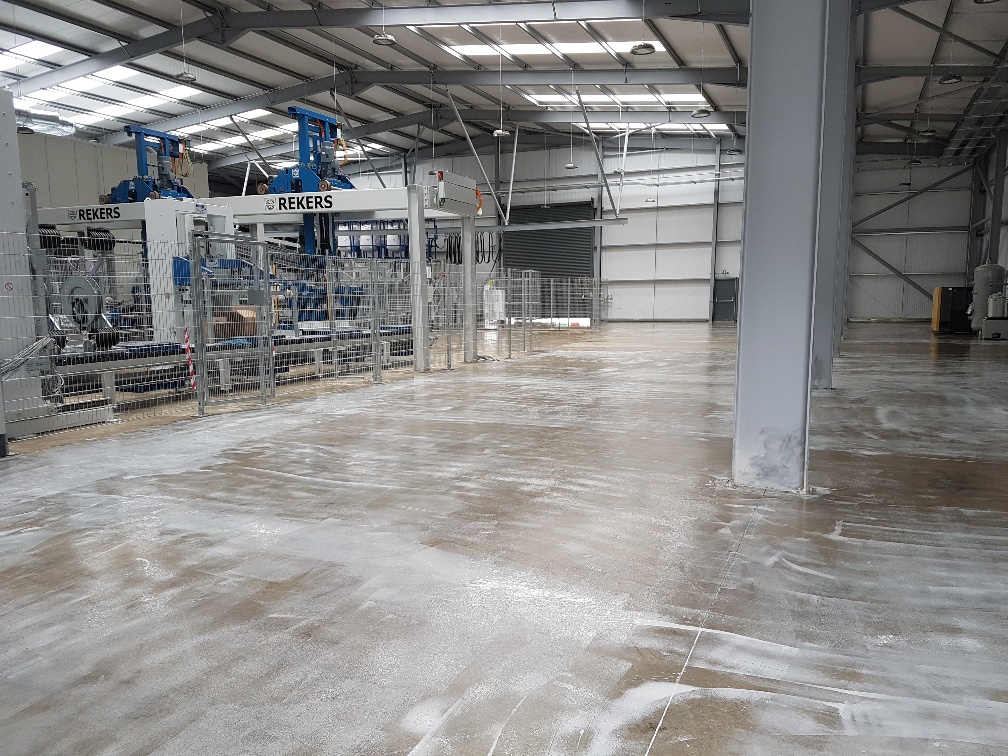
The surface must be free of brittle particles and laitence. Any remains of previous coatings should be removed by means of scabbling, shotblasting and/or diamond grinding. Oil and grease build up should be removed using high pressure hot water or steam jet, to fully expose the substrate. The substrate moisture content at the surface should be less than 75% RH. The substrate must have a minimum compressive strength of 25 N/mm² and a minimum pull-off strength of 1.5 N/mm². Important: free pores must be exposed to ensure good adhesion to the surface.
All water must be removed from the surface, leaving it damp but not wet. OT Primer XFH may then be applied to the damp surface immediately after cleaning.
Mixing
Mix only as much as can be applied within the pot life (see ‘Pot Life and Curing Time’). Add part ‘B’ to part ‘A’ in a suitable container, and thoroughly mix for at least 4 minutes. For best results use a slow speed drill with a mixing paddle, making sure all material from the sides and bottom of the container are thoroughly mixed in until a smooth, lump-free consistency is achieved.
Thorough mixing is imperative as an unmixed product will result in a poor or non-cure situation.
Application
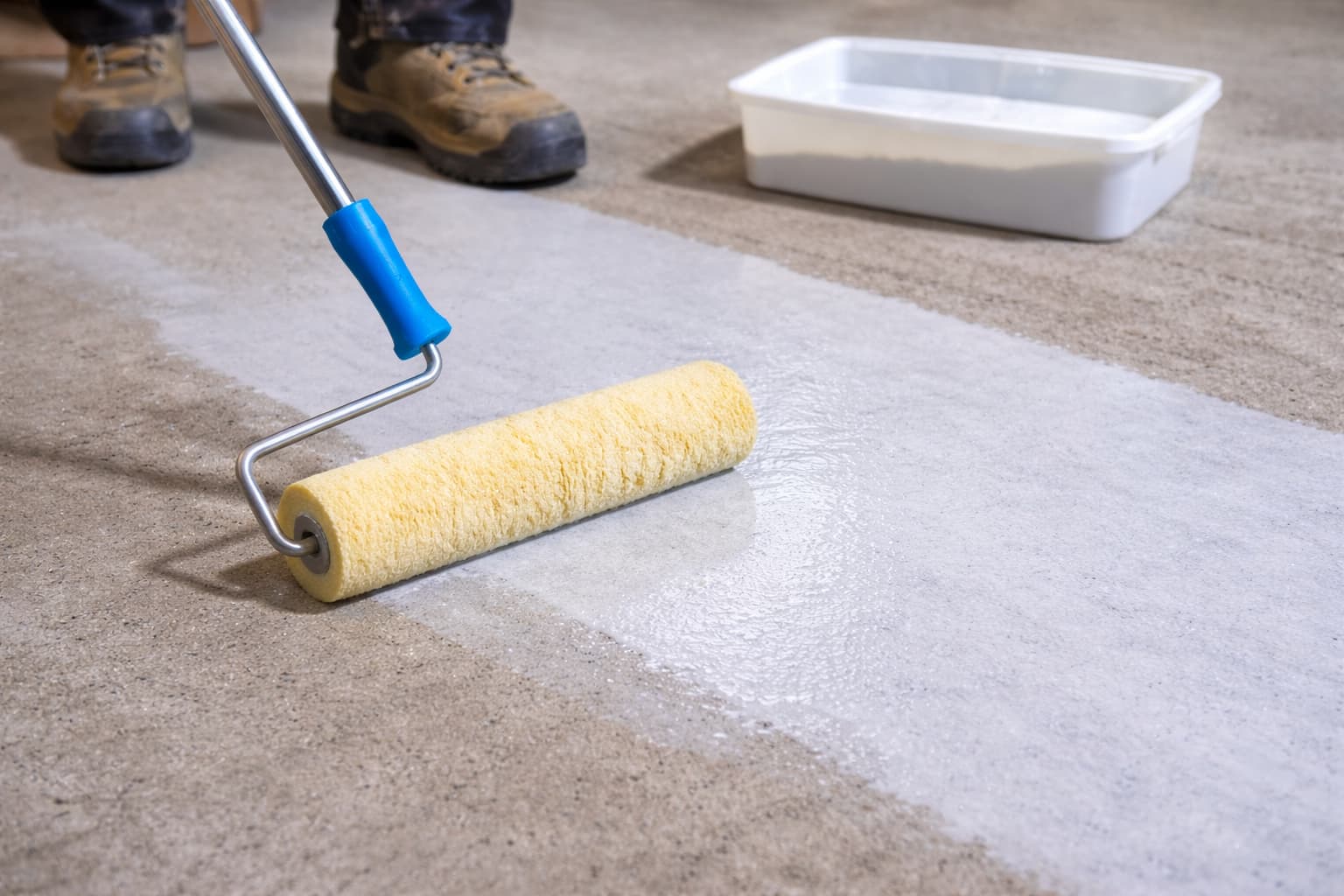
Apply by brush, squeegee or with a short to medium pile lamb’s wool roller, in one or more continuous applications until the material is absorbed and a film has formed. Make certain that the entire surface is completely covered to prevent oil or water migration. Oil or grease impregnated surfaces are best primed with a paint brush or soft sweeping broom, in order to ensure the primer is worked well into the surface. Allow to fully cure before the application of any further coating.
Whilst this is in fact extremely rare, it is important to note that if contamination is particularly bad, the substrate may require a further coat of OT Primer XFH.
Re. Self-Levelling Cementitious Screeds
Should the intention be to pour a cementitous screed (Polycote Easi-Screed) over the primer, then it is important to broadcast kiln dried sand over the primer to ensure an intercoat adhesion is achieved between the primer and the screed.
Aggregate should be sprinkled evenly over the OT Primer XFH whist it is still WET, at a rate of 1kg per m² (spiked shoes may be worn to avoid disturbing the wet coating). Allow to cure for a further 24 hours before removing any loose / excess aggregate from the surface, which is then ready to receive the desired Easi-Screed product.
Where dampness and/or oil contamination is of particular concern, it is advisable to seal the surface completely with one first coat of OT Primer XFH and then to lay a second coat onto which the aggregate would then be applied. The reason for this is to ensure there is no ‘bleed through’, should any particles of aggregate penetrate the primer. (Whilst any such penetration is in fact extremely unlikely, some companies with strict requirements/constraints prefer the certainty of a 100% seal, prior to any aggregate being applied).
Finally, please be free to consult our Technical Department, who will be more than happy to help with any specific requirement / concern.
Application Conditions
Ideal application temperature range is between 15˚C & 25˚C. Curing time will be extended at lower temperatures.
IMPORTANT: Ambient and substrate temperatures must not fall below 5˚C during the application or curing process as this causes an irreversible reaction blockade. After installation ensure that the ambient temperature remains above 5°C for at least 24 hours.