

Hot Tyre Pickup on Epoxy Floors: Causes and Prevention
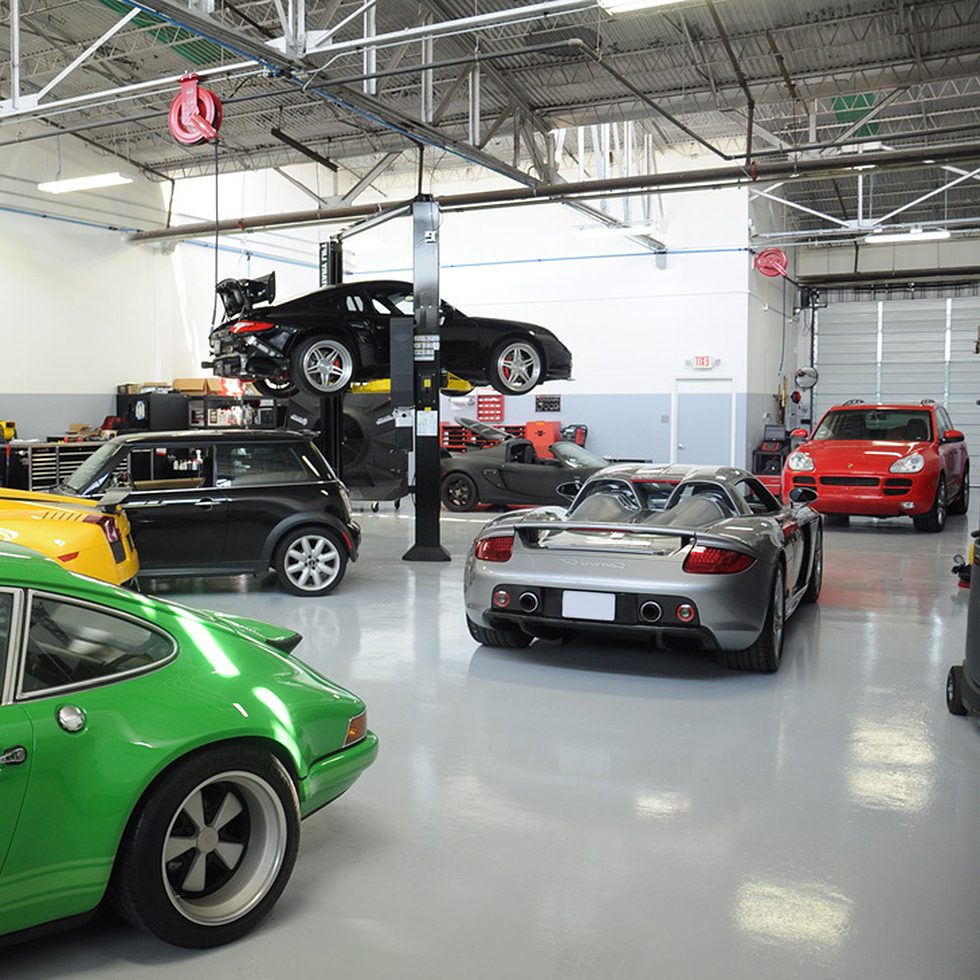
“Will epoxy peel from hot tyres?” is one of the most frequently asked questions by automotive businesses researching floor coatings. It’s also one of the main reasons many workshop owners hesitate to specify epoxy systems.
The short answer is: epoxy floors do not fail because of hot tyres alone. When hot tyre pickup occurs, it is almost always the result of incorrect specification, inadequate surface preparation, or missing elements within the flooring system, not an inherent flaw in epoxy itself.
Understanding what hot tyre pickup really is, why automotive workshops are particularly vulnerable, and how it can be prevented through proper preparation and system design is essential for avoiding premature floor failure and specifying epoxy floors with confidence.
“Will epoxy peel from hot tyres?” is one of the most frequently asked questions by automotive businesses researching floor coatings. It’s also one of the main reasons many workshop owners hesitate to specify epoxy systems.
The short answer is: epoxy floors do not fail because of hot tyres alone. When hot tyre pickup occurs, it is almost always the result of incorrect specification, inadequate surface preparation, or missing elements within the flooring system, not an inherent flaw in epoxy itself.
Understanding what hot tyre pickup really is, why automotive workshops are particularly vulnerable, and how it can be prevented through proper preparation and system design is essential for avoiding premature floor failure and specifying epoxy floors with confidence.
What is hot tyre pickup?
Hot tyre pickup occurs when heat and plasticisers from vehicle tyres soften a floor coating, allowing it to lift or peel away from the concrete surface. The coating may appear stuck to the tyre rather than the slab, leaving behind bald patches or torn areas in the floor finish.
Importantly, hot tyre pickup rarely happens immediately after installation. It typically appears weeks or months later, once vehicles have been repeatedly parked in the same locations and the coating has been exposed to sustained heat and pressure.
This delayed failure often leads to the assumption that the epoxy itself is unsuitable, when in reality, the underlying cause lies elsewhere in the system.
Hot tyre pickup occurs when heat and plasticisers from vehicle tyres soften a floor coating, allowing it to lift or peel away from the concrete surface. The coating may appear stuck to the tyre rather than the slab, leaving behind bald patches or torn areas in the floor finish.
Importantly, hot tyre pickup rarely happens immediately after installation. It typically appears weeks or months later, once vehicles have been repeatedly parked in the same locations and the coating has been exposed to sustained heat and pressure.
This delayed failure often leads to the assumption that the epoxy itself is unsuitable, when in reality, the underlying cause lies elsewhere in the system.
Why automotive workshops are high risk environments
Automotive environments create a perfect storm of conditions that can expose weaknesses in poorly designed floor coating systems.
Workshops typically combine:
- Hot tyres arriving directly from the road
- Long stationary parking periods, where heat is concentrated in one area
- Increasing vehicle weights, particularly from EVs and hybrids
Unlike retail garages or domestic settings, workshop floors experience repeated thermal loading in the same zones – service bays, MOT lanes, and parking areas. If the coating system beneath those tyres is not designed to cope with this stress, failure becomes far more likely.
Automotive environments create a perfect storm of conditions that can expose weaknesses in poorly designed floor coating systems.
Workshops typically combine:
- Hot tyres arriving directly from the road
- Long stationary parking periods, where heat is concentrated in one area
- Increasing vehicle weights, particularly from EVs and hybrids
Unlike retail garages or domestic settings, workshop floors experience repeated thermal loading in the same zones – service bays, MOT lanes, and parking areas. If the coating system beneath those tyres is not designed to cope with this stress, failure becomes far more likely.
Common misconceptions about hot tyre pickup
Hot tyre pickup is often blamed on:
- “Epoxy being too soft”
- “Epoxy not suitable for workshops”
- “All epoxy floors peel under tyres”
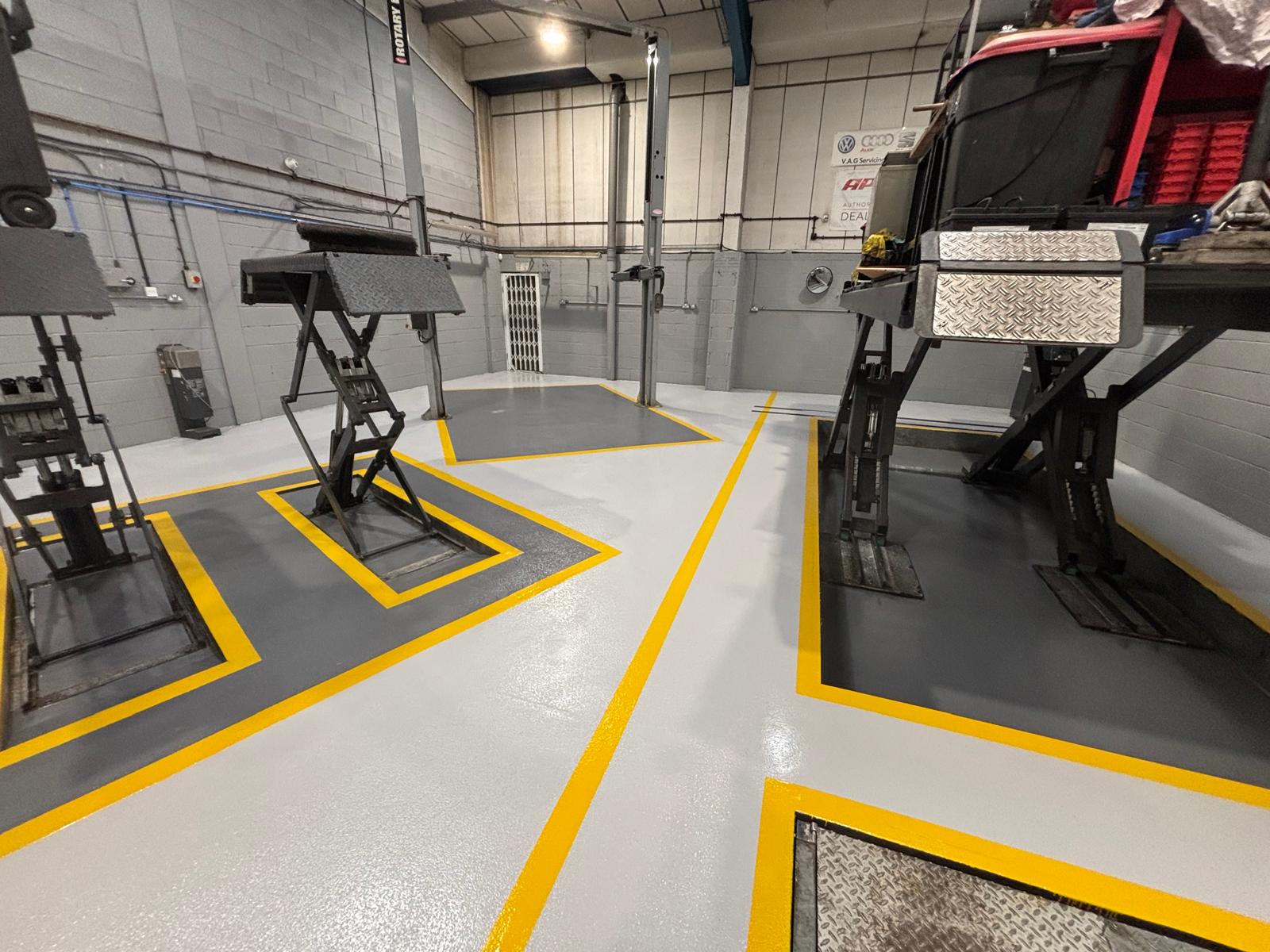
In reality, well-specified epoxy systems are used successfully in automotive facilities across the UK and Europe. When failures occur, they almost always trace back to installation and design issues, not the material category itself.
Hot tyre pickup is often blamed on:
- “Epoxy being too soft”
- “Epoxy not suitable for workshops”
- “All epoxy floors peel under tyres”
In reality, well-specified epoxy systems are used successfully in automotive facilities across the UK and Europe. When failures occur, they almost always trace back to installation and design issues, not the material category itself.
Root causes of hot tyre pickup
1. Inadequate surface preparation
Surface preparation is the single most critical factor in epoxy floor performance.
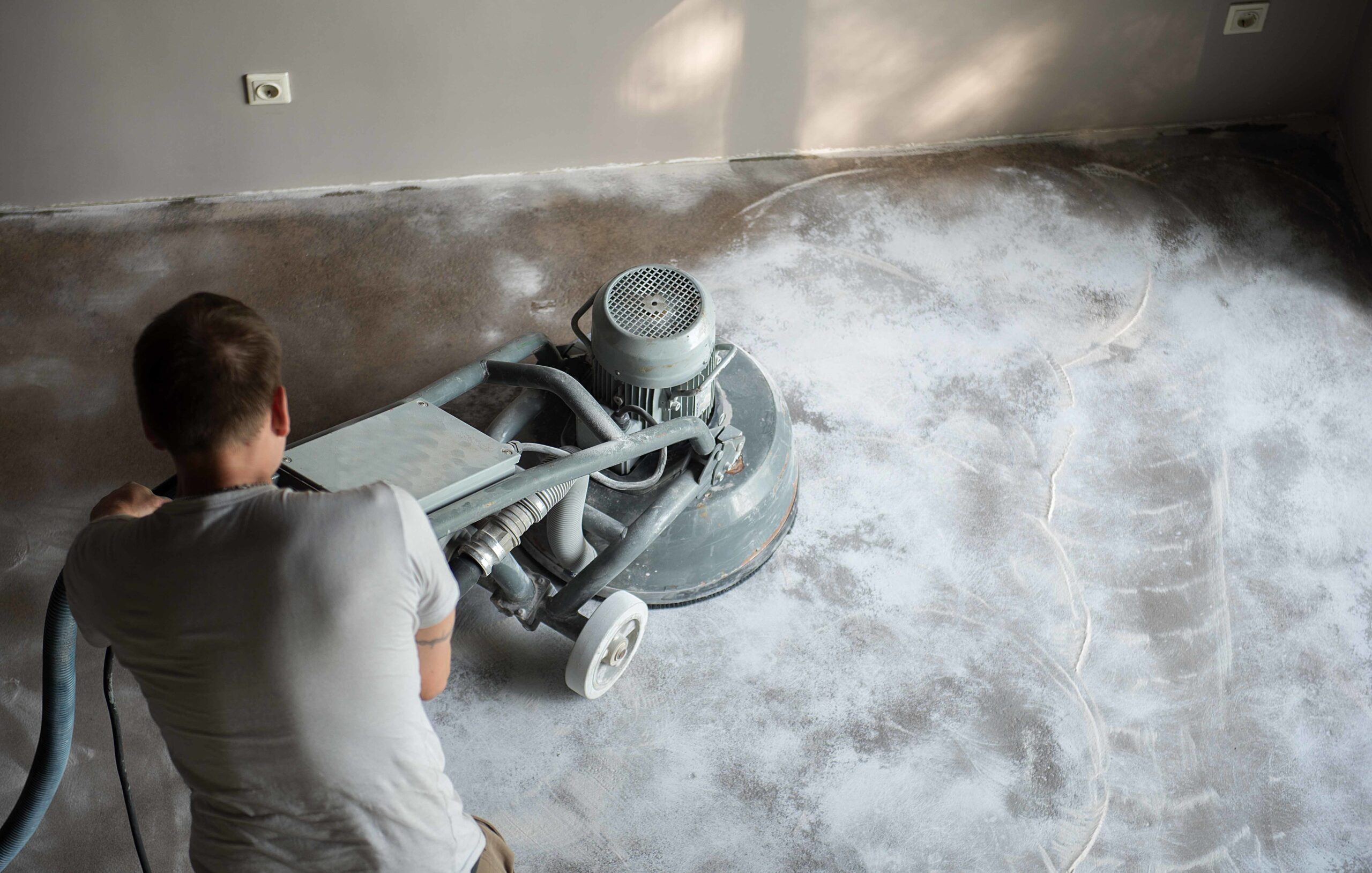
If concrete is not mechanically prepared to the correct profile (typically via shot blasting or diamond grinding), the coating cannot achieve a strong mechanical bond. Under heat and pressure from tyres, the weakest point — the bond to the substrate — is where failure occurs.
Simply cleaning or acid etching concrete is not sufficient for high-stress automotive environments.
2. Moisture vapour transmission from the slab
Moisture vapour transmission (MVT) is an often-overlooked contributor to hot tyre pickup.
Even if a floor appears dry, moisture pressure rising through the concrete slab can weaken adhesion over time. When combined with heat from tyres, this reduced bond strength increases the likelihood of peeling.
Without proper moisture testing and, where required, moisture-tolerant primers, the coating system remains vulnerable.
3. Incorrect coating selection
Not all epoxy systems perform the same.
Systems most at risk include:
- Low-solids epoxies
- Thin film coatings
- Systems without protective or wear-resistant topcoats
These coatings can soften more easily under heat and lack the film build needed to resist sustained thermal and mechanical stress.
1. Inadequate surface preparation
Surface preparation is the single most critical factor in epoxy floor performance.
If concrete is not mechanically prepared to the correct profile (typically via shot blasting or diamond grinding), the coating cannot achieve a strong mechanical bond. Under heat and pressure from tyres, the weakest point — the bond to the substrate — is where failure occurs.
Simply cleaning or acid etching concrete is not sufficient for high-stress automotive environments.
2. Moisture vapour transmission from the slab
Moisture vapour transmission (MVT) is an often-overlooked contributor to hot tyre pickup.
Even if a floor appears dry, moisture pressure rising through the concrete slab can weaken adhesion over time. When combined with heat from tyres, this reduced bond strength increases the likelihood of peeling.
Without proper moisture testing and, where required, moisture-tolerant primers, the coating system remains vulnerable.
3. Incorrect coating selection
Not all epoxy systems perform the same.
Systems most at risk include:
- Low-solids epoxies
- Thin film coatings
- Systems without protective or wear-resistant topcoats
These coatings can soften more easily under heat and lack the film build needed to resist sustained thermal and mechanical stress.
Designing hot tyre pickup out of the system
The good news is that hot tyre pickup is not inevitable. With correct system design, it can be effectively engineered out.
Effective prevention typically includes:
- Shot blasted or mechanically prepared concrete to achieve the correct surface profile
- Moisture-tolerant epoxy primers where slab conditions demand it
- Adequate film build, rather than thin decorative coatings
- Polyurethane or hybrid wear layers in parking and service bay zones, offering improved heat and plasticiser resistance
In high-risk areas, it is the system as a whole – not a single product – that provides long-term performance.
The good news is that hot tyre pickup is not inevitable. With correct system design, it can be effectively engineered out.
Effective prevention typically includes:
- Shot blasted or mechanically prepared concrete to achieve the correct surface profile
- Moisture-tolerant epoxy primers where slab conditions demand it
- Adequate film build, rather than thin decorative coatings
- Polyurethane or hybrid wear layers in parking and service bay zones, offering improved heat and plasticiser resistance
In high-risk areas, it is the system as a whole – not a single product – that provides long-term performance.
Epoxy floors and hot tyres: confidence through specification
When epoxy floors fail under hot tyres, the issue is rarely the epoxy itself. It is almost always a sign that something was missing from the design, preparation, or installation process.
For UK automotive workshops, service centres, and dealerships, the key is working with flooring specialists who understand:
- Substrate condition
- Moisture behaviour
- Vehicle loading
- Thermal stress points
With the right approach, epoxy remains a durable, cost-effective, and proven solution for automotive environments.
When epoxy floors fail under hot tyres, the issue is rarely the epoxy itself. It is almost always a sign that something was missing from the design, preparation, or installation process.
For UK automotive workshops, service centres, and dealerships, the key is working with flooring specialists who understand:
- Substrate condition
- Moisture behaviour
- Vehicle loading
- Thermal stress points
With the right approach, epoxy remains a durable, cost-effective, and proven solution for automotive environments.
Final takeaway
Hot tyre pickup is a design issue, not a product flaw.
By addressing surface preparation, moisture management, and system selection at the specification stage, workshop owners can avoid peeling, minimise disruption, and invest in flooring systems that perform exactly as expected – even under the heat and weight of modern vehicles.
Hot tyre pickup is a design issue, not a product flaw.
By addressing surface preparation, moisture management, and system selection at the specification stage, workshop owners can avoid peeling, minimise disruption, and invest in flooring systems that perform exactly as expected – even under the heat and weight of modern vehicles.
Need Advice on Automotive Flooring Solutions?
Our technical support team are on hand 7:30am – 5:00pm Monday to Friday to answer any questions about automotive flooring. Call 01234 846 780 or email [email protected].

Article contributors